Introduction
Innovation is the lifeblood of modern business. But the gap between an emerging technology and a practical, real-world solution is often wide and difficult to bridge. Research, experimentation, and disciplined engineering are required to transform promising ideas into products and services that deliver tangible value.
This article explores the journey from emerging technology to real-world innovation—the research process, the technologies driving change, and the practical steps organizations can take to turn innovation into impact.
The Innovation Journey: From Lab to Market
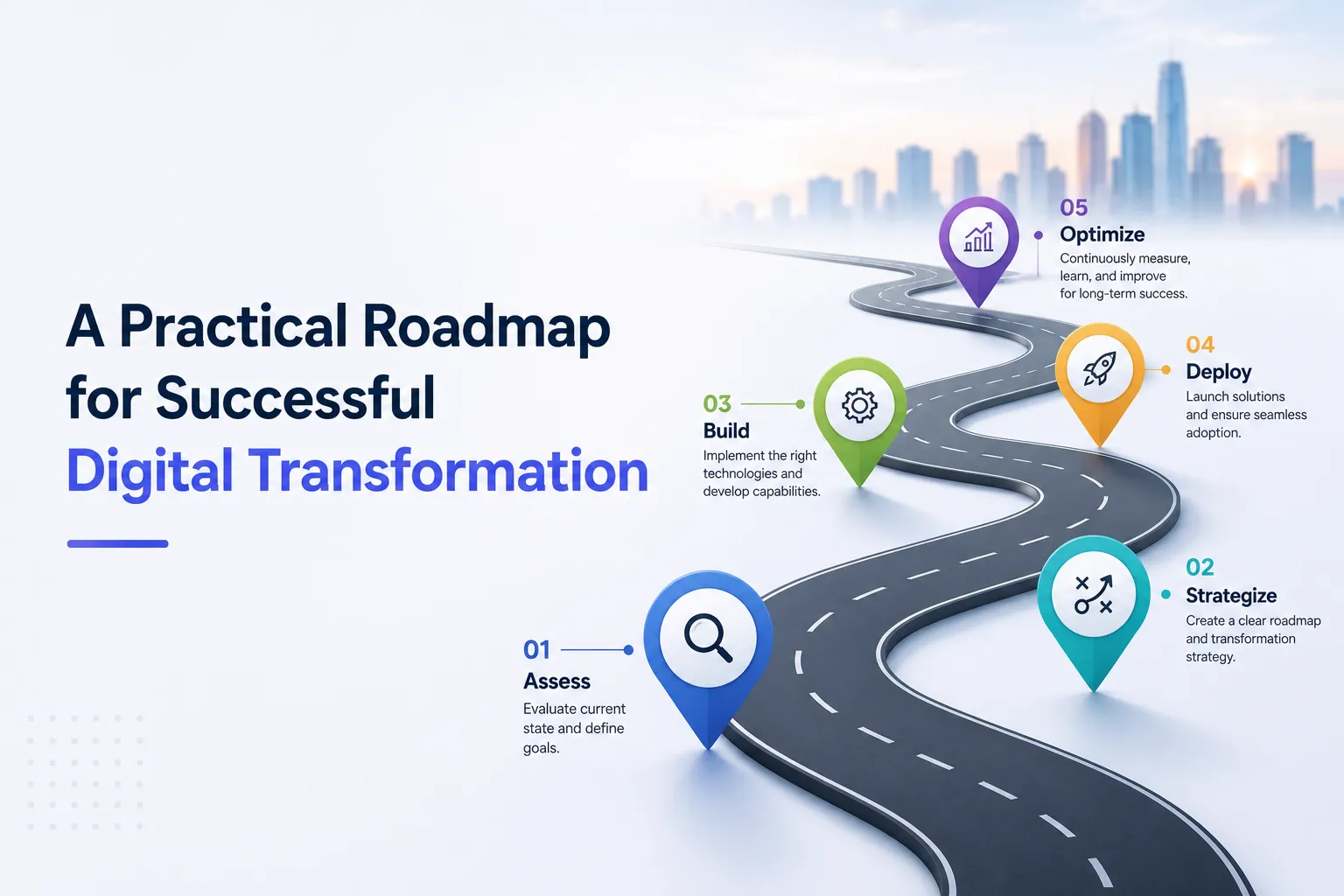
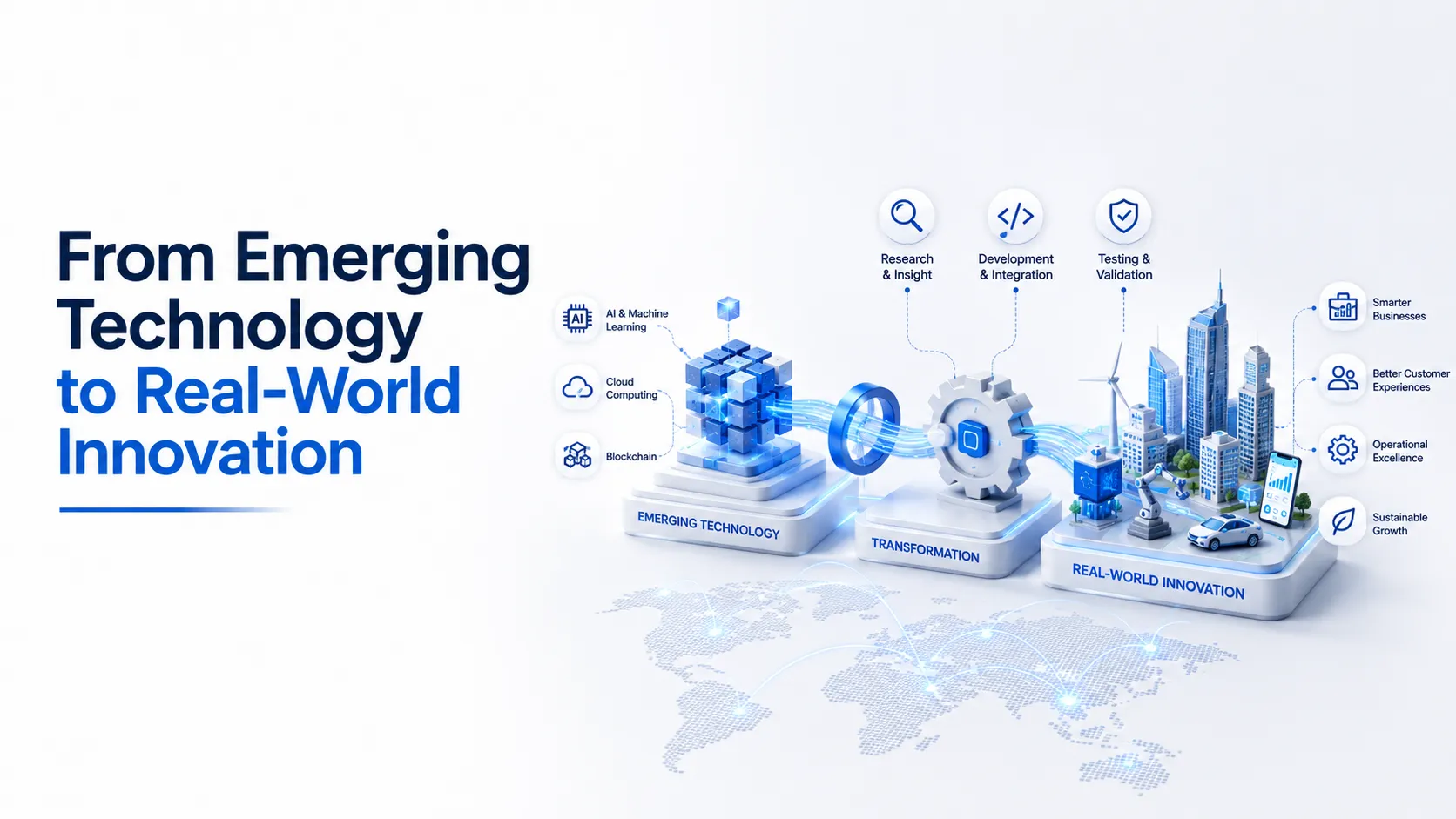
The path from emerging technology to real-world innovation typically follows several stages:
1. Discovery & Research
Identify promising technologies, conduct literature reviews, and explore potential applications. This phase involves understanding the technology's capabilities, limitations, and maturity.
2. Experimentation & Prototyping
Build proof-of-concept prototypes to test hypotheses, validate assumptions, and assess feasibility. Fail fast and learn quickly.
3. Development & Refinement
Transform successful prototypes into production-ready solutions. This includes engineering, integration, and performance optimization.
4. Deployment & Scaling
Launch solutions into the market, gather feedback, and scale for broader adoption. Continuous improvement is essential.
Involve users early and often. Real-world innovation requires feedback from the people who will use the solution. Co-creation accelerates adoption and ensures relevance.
Emerging Technologies Driving Innovation
Several technologies are at the forefront of innovation today:
1. Artificial Intelligence & ML
AI is transforming every industry—from healthcare diagnostics to financial risk assessment and autonomous systems. The ability to learn from data is unlocking new capabilities.
2. Internet of Things (IoT)
Connected devices generate real-time data that enables smarter operations, predictive maintenance, and new business models across manufacturing, logistics, and smart cities.
3. Cloud & Edge Computing
Scalable infrastructure allows organizations to build, deploy, and scale applications faster and more cost-effectively than ever before.
4. Quantum Computing
While still in early stages, quantum computing promises breakthroughs in optimization, simulation, and cryptography that could reshape entire industries.
Building a Culture of Research and Innovation
Innovation doesn't happen by accident—it requires a deliberate culture and approach:
- Encourage Curiosity: Create space for exploration and experimentation.
- Embrace Failure: Not every experiment will succeed. Learn from failures and iterate.
- Invest in People: Hire and develop talent with diverse skills and perspectives.
- Collaborate: Partner with universities, research institutions, and startups.
- Allocate Resources: Dedicate time and budget for research and development.
Avoid "innovation theater." Innovation is not about buzzwords or high-profile announcements—it's about delivering real value through practical solutions.
Applied Research: From Discovery to Delivery
Applied research bridges the gap between theoretical discovery and practical application. Key elements include:
- Problem-Driven Research: Focus on solving specific, real-world problems.
- Multidisciplinary Teams: Bring together diverse expertise—engineering, design, business, and domain knowledge.
- Rapid Prototyping: Build working models to test concepts quickly.
- User Validation: Test solutions with real users in real environments.
Case Study: R&D Driving Business Growth
A technology company invested significantly in research and development to explore emerging technologies. The results transformed their business:
By establishing a dedicated R&D function and embracing a fail-fast, learn-fast approach, the company was able to bring several new products to market rapidly, driving significant revenue growth and competitive advantage.
Future Directions for Innovation
Looking ahead, innovation will be shaped by:
- Generative AI: Automating creative and problem-solving tasks across industries.
- Biotech & Health Tech: Technology-driven advances in healthcare and life sciences.
- Sustainable Technology: Innovation focused on environmental impact and sustainability.
- Decentralized Systems: Blockchain and distributed ledgers for trust and transparency.
Conclusion
The journey from emerging technology to real-world innovation is challenging but essential for organizations that want to remain competitive. By investing in research, embracing experimentation, and focusing on practical outcomes, businesses can transform promising ideas into solutions that drive growth and impact.
At Insoft, we believe in the power of research and innovation. Our engineering teams work at the intersection of emerging technologies and practical application, helping organizations build solutions that solve real problems and create lasting value.
“Innovation is not just about having new ideas—it's about turning those ideas into something that matters.”