Introduction
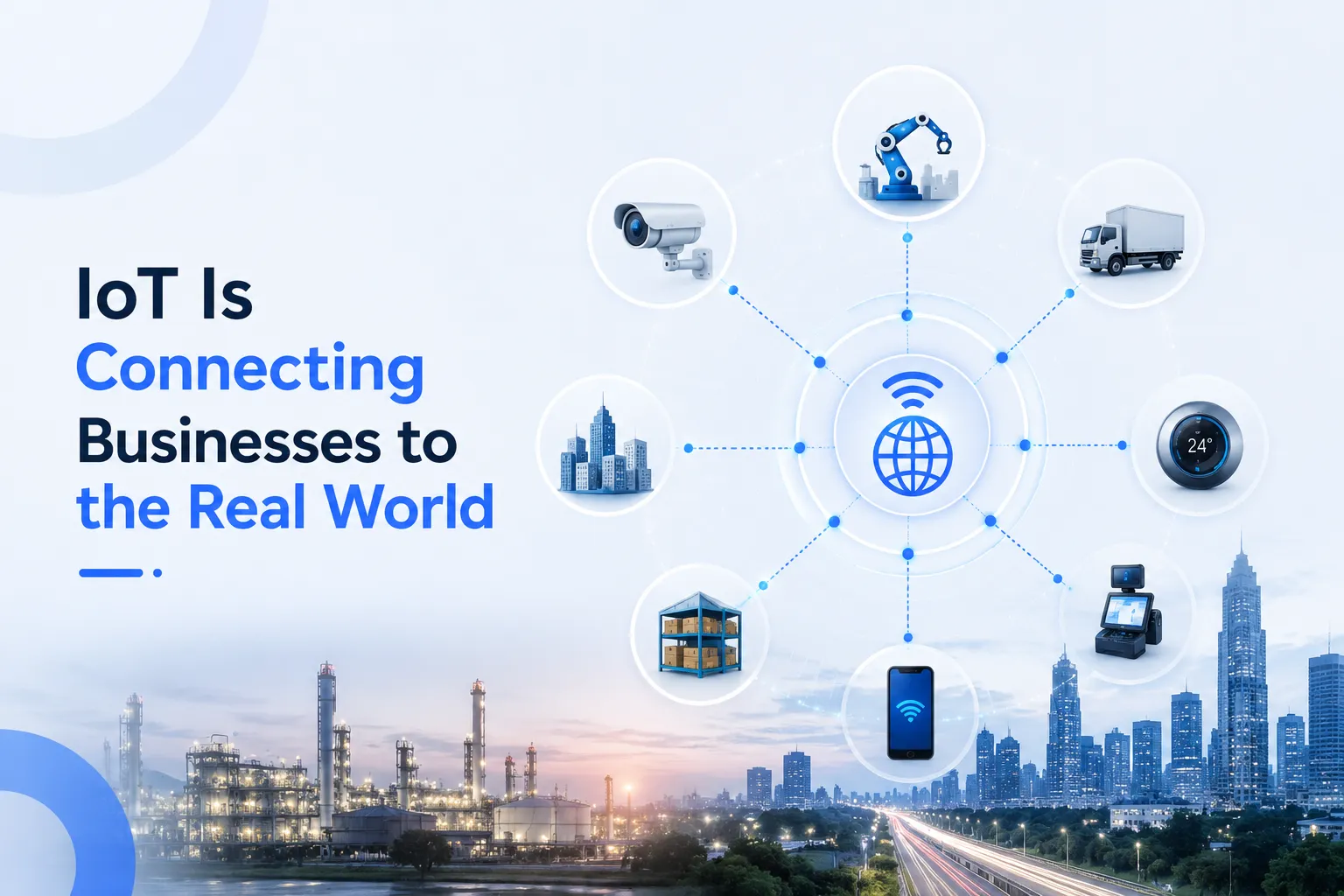
The Internet of Things (IoT) is fundamentally changing how businesses operate. By connecting physical devices, sensors, and equipment to digital systems, organizations can capture real-time data, automate processes, and gain unprecedented visibility into their operations. From manufacturing floors to supply chains and smart buildings, IoT is transforming industries across the board.
This article explores how IoT is connecting businesses to the physical world, the key technologies enabling this transformation, and the practical considerations for implementing IoT solutions at scale.
What is the Internet of Things?
The Internet of Things refers to the network of physical objects—devices, vehicles, buildings, and other items—embedded with sensors, software, and connectivity that enables them to collect and exchange data. These connected devices generate vast amounts of information that can be analyzed to derive insights, trigger actions, and improve decision-making.
At its core, IoT bridges the gap between the digital and physical worlds, allowing businesses to monitor, control, and optimize their operations in ways that were previously impossible.
Key Technologies Powering IoT
Several technologies work together to enable IoT solutions:
1. Sensors & Actuators
Devices that collect data from the physical environment (temperature, motion, pressure, humidity) and perform actions based on commands.
2. Connectivity
Communication protocols like Wi-Fi, Bluetooth, LoRaWAN, 5G, and Zigbee that transmit data from devices to cloud platforms.
3. IoT Platforms
Cloud-based platforms (AWS IoT Core, Azure IoT Hub) that manage device connectivity, data ingestion, and analytics.
4. Data Analytics & AI
Machine learning and analytics tools that transform raw sensor data into actionable insights and predictions.
Business Applications of IoT
IoT is being applied across virtually every industry. Here are some of the most impactful use cases:
Predictive Maintenance
By monitoring equipment sensors for vibrations, temperature, and other metrics, organizations can predict when machinery is likely to fail and perform maintenance proactively—reducing downtime and extending asset life.
Supply Chain Optimization
IoT sensors track goods in transit, providing real-time visibility into location, temperature, humidity, and handling conditions. This enables better inventory management, reduced spoilage, and improved customer satisfaction.
Smart Buildings & Facilities
Connected sensors monitor and control lighting, HVAC, security, and energy usage, reducing operating costs and improving occupant comfort.
Asset Tracking
GPS and RFID tags enable organizations to track high-value assets across facilities, reducing loss and improving utilization rates.
Quality Control
Computer vision and sensor data enable real-time quality inspection on manufacturing lines, catching defects early and reducing waste.
Start with a clear business outcome: Identify the specific operational challenge you want to solve before selecting IoT technology. This ensures ROI and stakeholder buy-in.
IoT Architecture: From Edge to Cloud
A well-designed IoT architecture typically consists of four layers:
- Device Layer: Sensors, actuators, and edge devices that collect and act on data.
- Connectivity Layer: Gateways and network protocols that transmit data to the cloud.
- Platform Layer: Cloud services for device management, data ingestion, and storage.
- Application Layer: Analytics, dashboards, and business applications that turn data into insights.
Security Considerations for IoT
IoT security is a critical concern. Key considerations include:
- Device authentication: Ensure only authorized devices can connect to the network.
- Data encryption: Encrypt data in transit and at rest.
- Firmware updates: Regularly update device firmware to patch vulnerabilities.
- Network segmentation: Isolate IoT devices from critical business systems.
Never deploy IoT devices with default credentials. Change default passwords and implement strong authentication mechanisms.
Case Study: Manufacturing Optimization
A mid-sized manufacturing company implemented an IoT solution to monitor production line performance. By analyzing sensor data from machinery, they identified bottlenecks and optimized production schedules.
Common Challenges in IoT Adoption
While IoT offers significant benefits, organizations often face challenges:
- Data volume: Managing and storing massive amounts of sensor data.
- Integration: Connecting IoT platforms with existing enterprise systems.
- Skills gap: Finding talent with expertise in IoT, data science, and embedded systems.
- Scalability: Scaling solutions from pilot to enterprise-wide deployment.
Future Trends in IoT
The IoT landscape continues to evolve. Key trends to watch include:
- Edge AI: Processing data at the edge reduces latency and bandwidth requirements.
- 5G Connectivity: Ultra-low latency and high bandwidth enable new IoT applications.
- Digital Twins: Virtual replicas of physical assets for simulation and optimization.
- IoT Security Standards: Industry-wide standards for device security and data privacy.
Conclusion
The Internet of Things is more than a technology trend—it is a fundamental shift in how businesses connect to the physical world. By leveraging connected devices, real-time data, and intelligent analytics, organizations can improve operational efficiency, reduce costs, and unlock new revenue streams.
At Insoft, we help businesses design and implement IoT solutions that deliver measurable results. From device selection and connectivity to data analytics and integration, our engineering team provides end‑to‑end expertise.
“IoT is not about the things themselves—it's about the insights they generate and the actions they enable.”