Introduction
Cloud-native architecture has become the standard for building modern digital platforms. By leveraging the scalability, resilience, and elasticity of the cloud, organizations can deliver applications that are more reliable, cost-effective, and responsive to business needs. But building cloud-native systems requires a fundamental shift in how we design, deploy, and operate software.
This article explores the principles, patterns, and engineering practices for building scalable and secure cloud-native systems that deliver business value.
Cloud-Native Principles
Cloud-native systems are built on a set of foundational principles that differentiate them from traditional applications:
1. Microservices Architecture
Decompose applications into small, independently deployable services that communicate over well-defined APIs. This enables teams to develop, deploy, and scale services independently.
2. Containerization
Package applications and their dependencies into lightweight containers. This ensures consistency across environments and simplifies deployment and scaling.
3. Orchestration
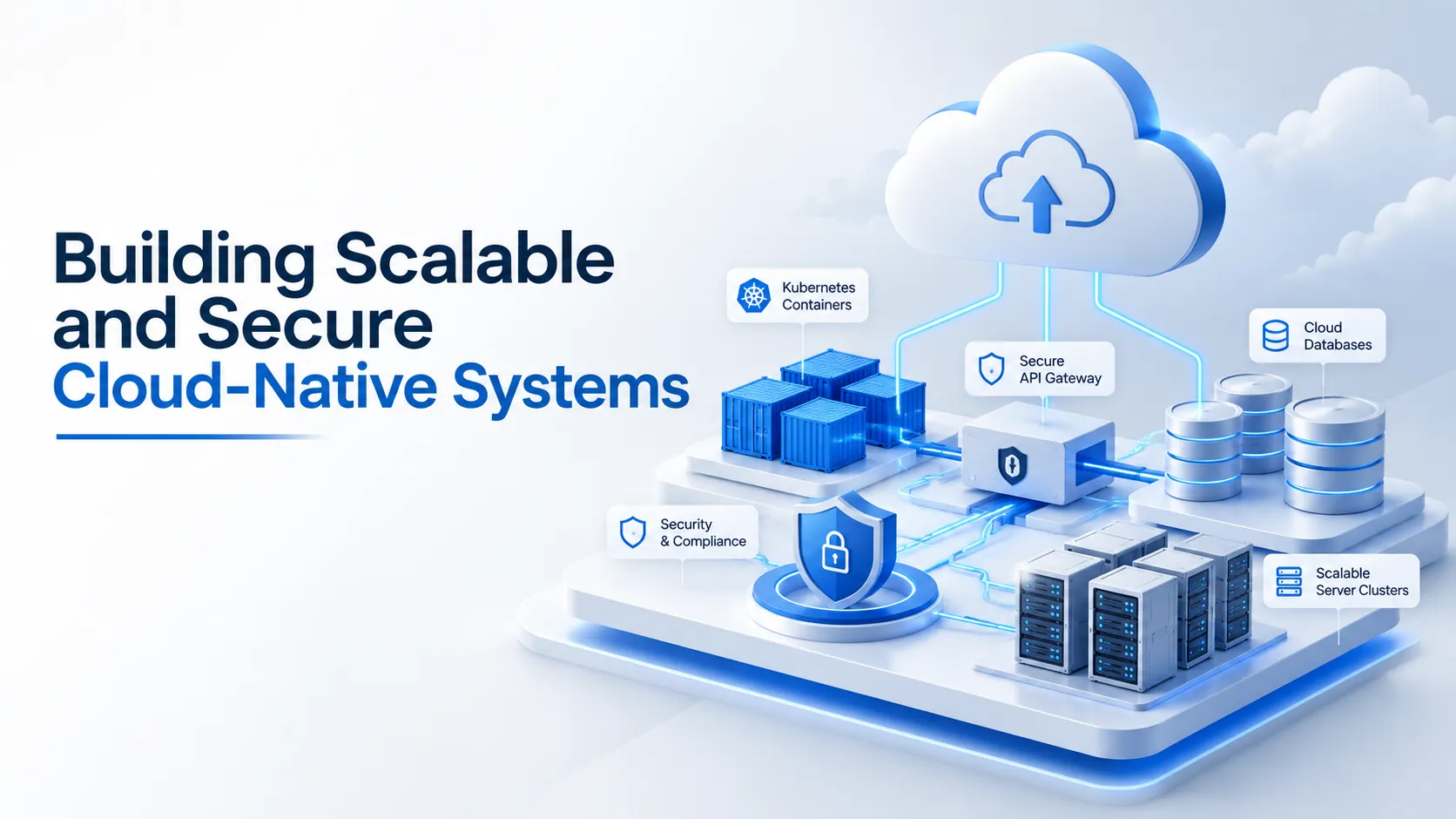
Use container orchestration platforms like Kubernetes to manage deployment, scaling, and operations of containerized applications.
4. Declarative Infrastructure
Define infrastructure as code (IaC) using declarative languages like Terraform or CloudFormation. This enables version control, review, and automated provisioning.
Design for failure: Cloud-native systems must be resilient. Implement circuit breakers, retries, timeouts, and graceful degradation to handle failures effectively.
Key Cloud Architecture Patterns
Several architectural patterns are essential for building cloud-native systems:
1. Twelve-Factor App
A methodology for building software-as-a-service applications that are portable, resilient, and scalable across cloud environments.
2. Event-Driven Architecture
Services communicate through events, enabling loose coupling, scalability, and real-time responsiveness.
3. Strangler Pattern
Gradually replace legacy system components with cloud-native services, minimizing risk and disruption.
4. CQRS & Event Sourcing
Separate read and write operations to optimize performance and maintain a complete audit trail of changes.
Building for Scalability
Scalability is a core benefit of cloud-native systems. Key strategies include:
- Horizontal Scaling: Add more instances of services to handle increased load, rather than upgrading single instances.
- Auto-Scaling: Use cloud provider auto-scaling groups to dynamically adjust capacity based on demand.
- Stateless Services: Design services without persistent state to enable easy scaling and recovery.
- Caching: Reduce database load and improve response times with distributed caching (e.g., Redis).
- Content Delivery Networks (CDN): Serve static assets from edge locations to reduce latency.
Security in Cloud-Native Systems
Security must be embedded throughout the cloud-native lifecycle:
Zero Trust Architecture
Assume no implicit trust. Verify every access request, regardless of source, using identity-based security policies.
Identity & Access Management (IAM)
Implement fine-grained access controls using service accounts, roles, and policies. Use least-privilege principles.
Secrets Management
Never store secrets in code. Use secure vaults like HashiCorp Vault or cloud provider secrets managers.
Network Security
Implement VPCs, security groups, and service meshes (like Istio) to control communication between services.
Never hardcode credentials. Use environment variables or secrets managers to inject sensitive information at runtime.
Observability & Monitoring
Cloud-native systems require comprehensive observability to ensure reliability and performance:
- Logging: Centralize logs for troubleshooting and auditing.
- Metrics: Collect key performance indicators (KPIs) like latency, error rates, and throughput.
- Tracing: Implement distributed tracing to understand request flows across services.
- Alerting: Set up proactive alerts to identify issues before they impact users.
Case Study: E-Commerce Platform Migration
An e-commerce company migrated their monolithic platform to a cloud-native microservices architecture. The results were transformative:
By adopting Kubernetes, implementing CI/CD pipelines, and leveraging cloud-managed services, the company reduced time-to-market for new features from weeks to hours while improving reliability and reducing operational costs.
Cloud-Native Best Practices
- Start with a landing zone: Establish a well-architected foundation with security, networking, and governance.
- Use managed services: Leverage cloud provider services (databases, message queues, monitoring) to reduce operational overhead.
- Implement CI/CD: Automate testing, deployment, and rollback processes.
- Monitor costs: Use cost management tools to optimize cloud spending.
- Regularly review architecture: Continuously improve based on evolving requirements and cloud provider capabilities.
Future Trends in Cloud-Native Systems
The cloud-native landscape continues to evolve rapidly:
- Serverless Computing: Event-driven, fully managed compute services reduce operational overhead.
- Edge Computing: Processing data closer to users for lower latency and improved performance.
- AI-Ops: Using AI to automate incident detection, root cause analysis, and remediation.
- Green Cloud: Carbon-aware computing and sustainable cloud infrastructure.
- Platform Engineering: Internal developer platforms to streamline application delivery.
Conclusion
Building scalable and secure cloud-native systems requires a deliberate approach to architecture, engineering, and operations. By embracing cloud-native principles, leveraging modern patterns, and embedding security throughout the lifecycle, organizations can deliver reliable, cost-effective, and resilient digital platforms.
At Insoft, we help organizations design and implement cloud-native solutions that drive business growth. Our engineering team brings deep expertise in cloud architecture, DevOps, and security to deliver platforms that scale with your business.
“Cloud-native is not just about where you run your applications—it's about how you build, deploy, and operate them.”