Introduction
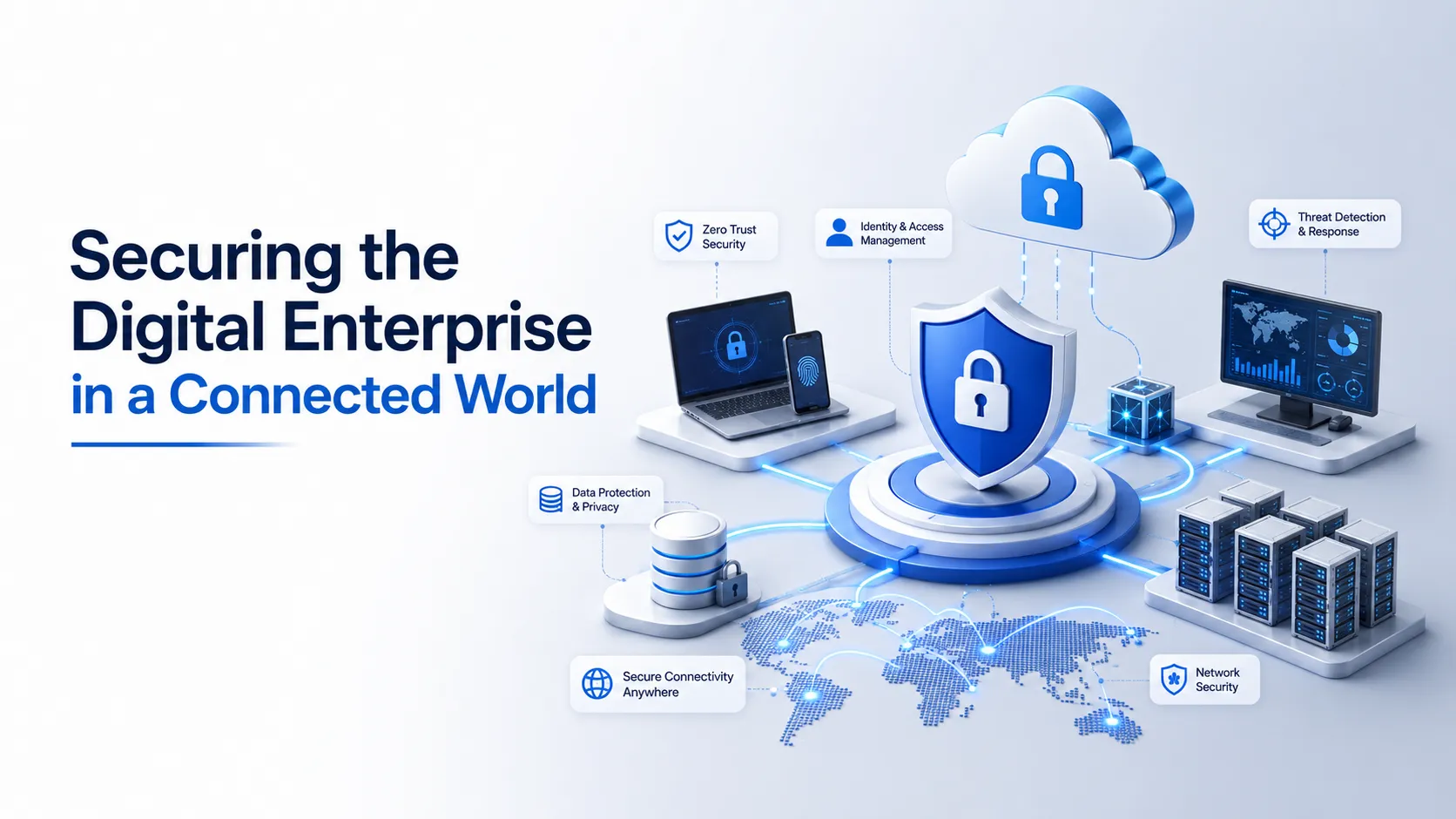
In an increasingly connected world, cybersecurity is no longer an afterthought—it is a fundamental requirement for every organization. As businesses embrace cloud, IoT, AI, and digital transformation, the attack surface expands, and the stakes grow higher. Securing the digital enterprise requires a proactive, layered approach that spans people, processes, and technology.
This article explores the key pillars of enterprise cybersecurity, including secure software architecture, data protection, identity management, and the strategies needed to defend against evolving threats.
The Modern Threat Landscape
Organizations face a diverse and evolving set of cyber threats:
- Ransomware: Malicious software that encrypts data and demands payment for its release.
- Phishing & Social Engineering: Attackers manipulate employees into revealing credentials or sensitive information.
- Insider Threats: Employees or contractors with authorized access intentionally or accidentally cause harm.
- Supply Chain Attacks: Attackers target third-party vendors and service providers to gain access to the organization.
- Zero-Day Exploits: Attacks that target unknown vulnerabilities before patches are available.
These threats highlight the need for a comprehensive, proactive security strategy that protects against both external and internal risks.
Zero Trust: The New Security Paradigm
The Zero Trust security model assumes that no user, device, or network is inherently trustworthy. Every access request must be explicitly verified, regardless of its origin.
Core Principles of Zero Trust
- Verify Explicitly: Always authenticate and authorize based on all available data points (user identity, device health, location).
- Use Least Privilege: Grant users only the minimum access needed to perform their tasks.
- Assume Breach: Design systems to limit the blast radius of a potential breach.
Implement microsegmentation: Divide your network into small, isolated segments to prevent lateral movement by attackers.
Secure Software Development Lifecycle
Security must be integrated into every phase of software development:
1. Requirements & Design
Define security requirements early, conduct threat modeling, and identify potential attack vectors.
2. Development
Follow secure coding practices, use static analysis tools, and conduct peer code reviews.
3. Testing
Perform dynamic application security testing (DAST), penetration testing, and vulnerability scanning.
4. Deployment
Use secure configurations, automate security checks in CI/CD pipelines, and manage secrets properly.
5. Operations
Continuously monitor, apply patches, and maintain an incident response plan.
Identity & Access Management (IAM)
IAM is the cornerstone of enterprise security. It ensures that the right people have the right access at the right time.
- Multi-Factor Authentication (MFA): Require multiple forms of verification for sensitive access.
- Single Sign-On (SSO): Simplify user experience while centralizing access control.
- Role-Based Access Control (RBAC): Assign permissions based on job roles.
- Privileged Access Management (PAM): Monitor and control access to critical systems.
Data Protection & Privacy
Protecting sensitive data is both a security and regulatory imperative. Key strategies include:
- Encryption: Encrypt data at rest and in transit using strong algorithms (e.g., AES-256, TLS 1.3).
- Data Classification: Categorize data based on sensitivity and apply appropriate controls.
- Data Loss Prevention (DLP): Monitor and prevent unauthorized data exfiltration.
- Backup & Recovery: Maintain encrypted backups and test recovery procedures regularly.
- Compliance: Adhere to regulations like GDPR, CCPA, HIPAA, and industry standards.
Regularly review and update your data protection policies. Regulatory requirements and threat landscapes change rapidly—staying current is essential.
Security Operations & Monitoring
Effective security operations enable organizations to detect, respond, and recover from incidents:
- Security Information and Event Management (SIEM): Centralize and analyze security logs.
- Threat Intelligence: Stay informed about emerging threats and attack patterns.
- Incident Response: Have a clear, tested plan for responding to breaches.
- Regular Audits: Conduct security assessments and penetration testing.
Case Study: Financial Services Security Overhaul
A financial services organization implemented a comprehensive security modernization program, including Zero Trust, IAM, and data protection enhancements. The results were significant:
By implementing Zero Trust principles, enforcing MFA, and adopting a modern SIEM platform, the organization significantly reduced its risk profile while meeting strict regulatory requirements.
Future Trends in Cybersecurity
The cybersecurity landscape is constantly evolving. Key trends to watch:
- AI-Powered Security: AI and machine learning will enhance threat detection and response automation.
- Zero Trust Adoption: More organizations will embrace Zero Trust as their primary security model.
- Secure Access Service Edge (SASE): Convergence of networking and security services for remote workforces.
- Quantum-Resistant Cryptography: Preparing for the threat of quantum computing to current encryption.
- Cyber Insurance Requirements: Insurers will demand stronger security controls.
Conclusion
Securing the digital enterprise requires a comprehensive, proactive approach that integrates security into every aspect of the organization. By adopting Zero Trust principles, embedding security into software development, protecting data, and maintaining robust operations, organizations can defend against evolving threats and build trust with customers and partners.
At Insoft, we help organizations strengthen their cybersecurity posture through secure architecture design, application security testing, and security transformation programs.
“Security is not a destination—it is a continuous journey of improvement and adaptation.”